

You’ve spotted something on a tooth. Maybe a dark speck, or a twinge when something sweet hits it. The question that follows is always the same: is that a cavity, or is it nothing?
You can learn a lot by looking carefully and paying attention to what your mouth is telling you. What you can’t do is confirm it yourself, because the earliest stage of decay can’t be seen or felt.
This guide from Oxnard Dentistry covers what a cavity looks like, what it feels like, what gets mistaken for one, and what finally settles the question.
Quick Summary
- The National Institute of Dental and Craniofacial Research puts it plainly: in early tooth decay, there aren’t usually any symptoms. Feeling fine proves nothing.
- A chalky white spot is the first thing you can see. It’s lost minerals, not yet a hole.
- Pain and sensitivity to sweet, hot or cold tend to show up later, once decay has advanced.
- Plenty of dark marks aren’t cavities at all. Staining, tartar and the edges of old fillings all get mistaken for one.
- Early decay can be reversed before a hole forms. Once there’s a hole, it can’t be.
- An exam and an X-ray are what confirm it, and both take minutes.
What a cavity looks like, stage by stage
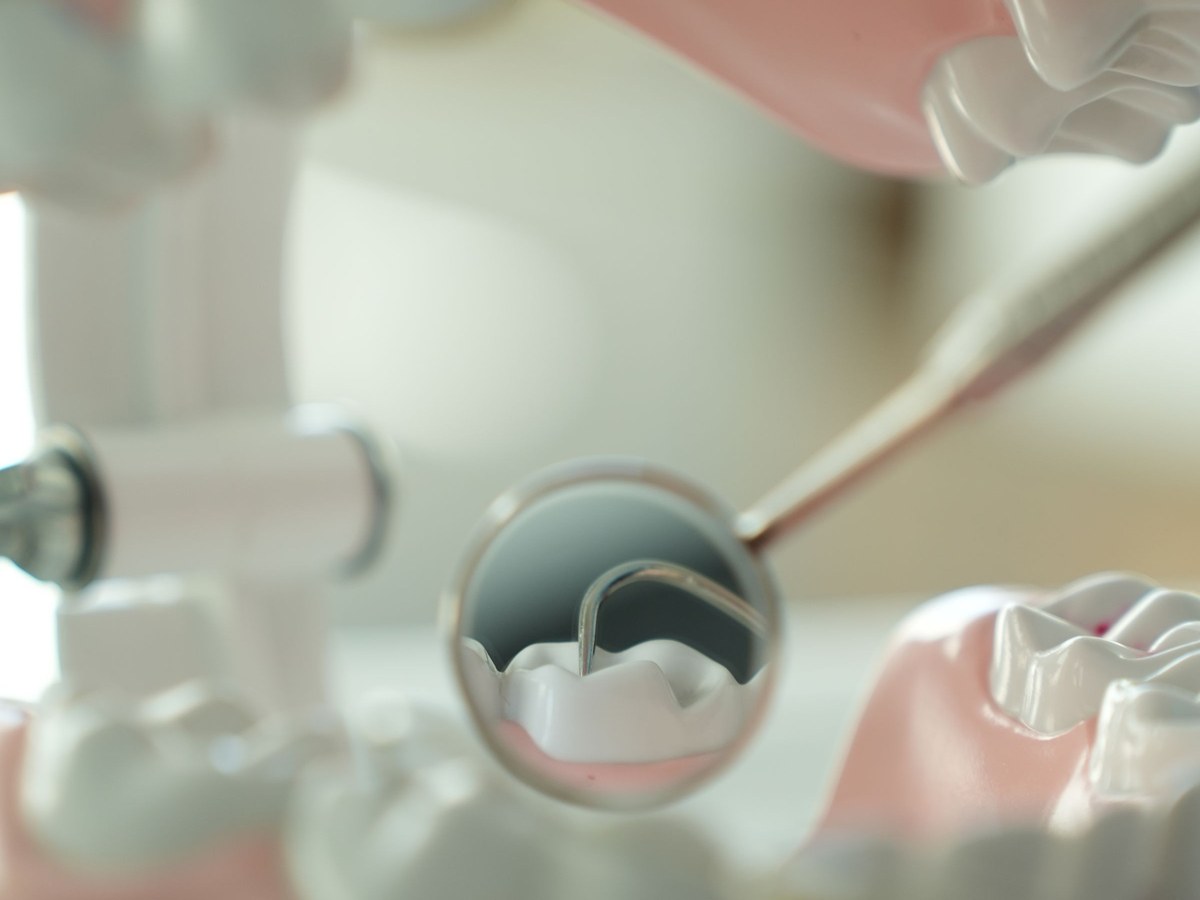
Decay doesn’t arrive as a hole. It gets there in steps, and each one looks different.
A white, chalky spot. The National Institute of Dental and Craniofacial Research describes it simply: a white spot may appear where minerals have been lost. It often sits along the gumline, and it’s easy to miss because it’s pale against pale enamel.
A brown or black mark. As the surface keeps breaking down, the spot darkens. This is the stage most people notice first, usually in a mirror under decent light.
A visible pit or hole. By now the surface has given way. You might catch it with a fingernail or see a shadow where the tooth has collapsed slightly.
Where decay starts matters as much as what it looks like. It tends to begin in the grooves on the chewing surfaces of back teeth, at the contact points between teeth and along the gumline, and the middle one of those is impossible to see in a bathroom mirror.
What it feels like, and why plenty feel like nothing
This is the part that catches people out. According to the National Institute of Dental and Craniofacial Research, early tooth decay usually has no symptoms at all. Discomfort is a late arrival, not an early warning.
When something does register, the same source says advancing decay can cause a toothache or sensitivity to sweets, hot or cold. Sweet is often the first trigger people notice, and it’s usually one tooth rather than a whole side of the mouth. A short, sharp response to a cold drink that fades in seconds is different from a dull ache that lingers, and your dentist will want to know which one you’ve got.
If sensitivity is your main symptom and it came on suddenly, our guide on why teeth turn sensitive out of nowhere covers the other causes worth ruling out.
The signs people miss
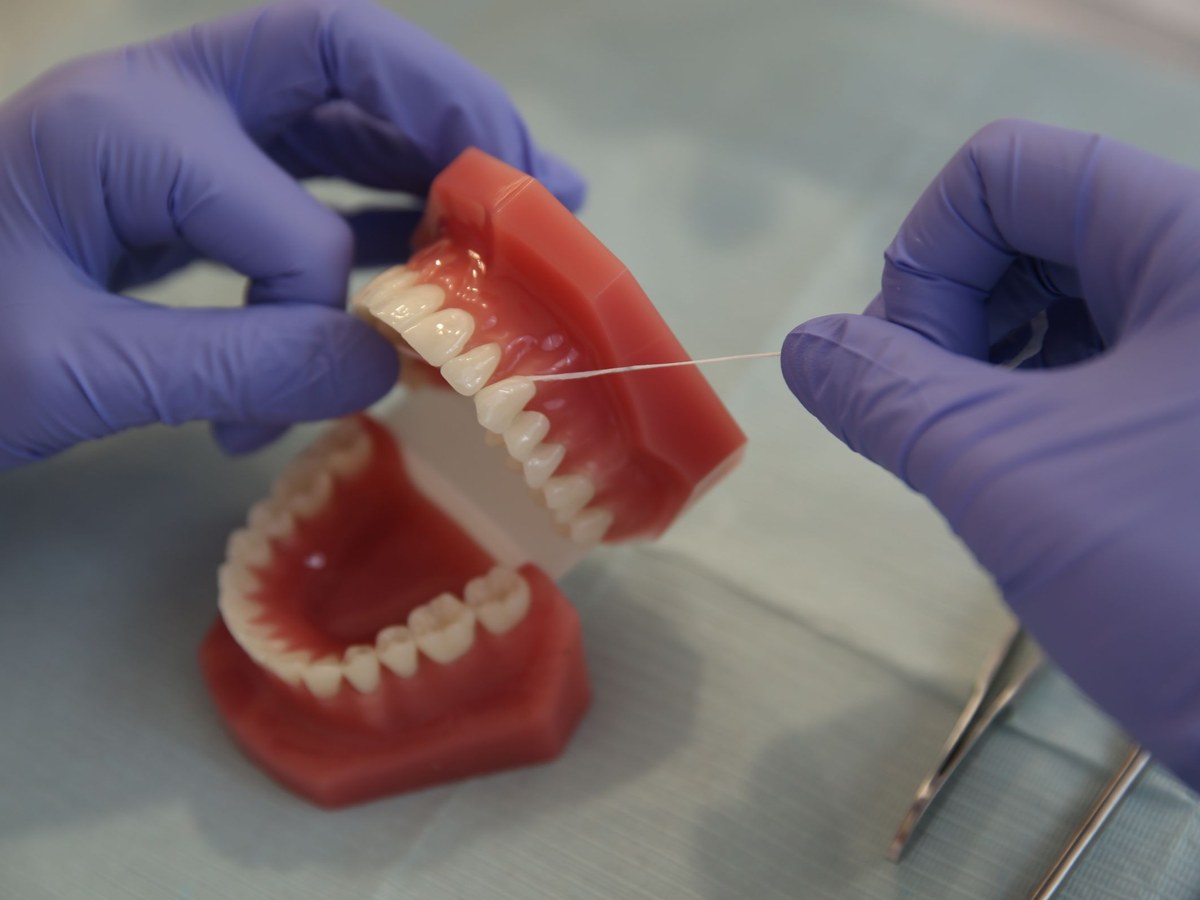
None of these prove anything by themselves. They’re the things worth mentioning at your next visit, because they often point at a spot that deserves a closer look.
- Floss shreds or catches in the same gap. A rough edge between two teeth will snag thread in the same place every time.
- Food packs into one specific spot. Not everywhere, just that one place, every meal.
- Your tongue keeps finding a rough edge. Tongues are good at this and tend to return to anything new.
- A bad taste or odour from one area that brushing doesn’t shift.
What can be mistaken for a cavity
Plenty of people arrive convinced they’ve found decay and leave with good news. These are the usual look-alikes.
- Surface staining. Coffee, tea and tobacco leave marks that sit on the enamel rather than in it. Staining often lifts at a routine cleaning.
- Tartar. Hardened plaque, usually along the gumline, and it can look dark. It doesn’t brush off, which is exactly why people assume the worst. Our post on what a deep cleaning actually involves explains how it’s removed.
- The edge of an old filling. A dark line where filling meets tooth is common. This one does need checking, though: the American Dental Association notes that decay around the margins of fillings is common in older adults.
- An exposed root surface. The American Dental Association explains that gum recession, together with gum disease, can expose tooth roots to plaque, and that root decay is common in people over 50. Root surfaces are softer than enamel and look darker. If your gums have pulled back, our guide to gum disease is worth a read.
- A developmental white spot. Some white marks have been there since the tooth came through and aren’t decay at all.
- A craze line. A fine crack in the enamel surface that picks up stain and reads as a dark line.
Telling these apart by eye is genuinely difficult, which is the whole reason the next section exists.
Can a cavity go away on its own?
Partly, and the distinction is worth getting right, because a lot of what circulates online gets it wrong.
Enamel can repair itself. The National Institute of Dental and Craniofacial Research explains that it does this using minerals from saliva and fluoride from toothpaste, or from fluoride applied by a dentist or hygienist. That’s real, and it’s why early damage isn’t a one-way street.
The limit is sharp, though. The same source states that if tooth decay is still in its early stages, before a hole forms, the dentist can apply fluoride to reverse the decay. The condition in that sentence is doing the work.
Once a hole has formed, no rinse, oil, diet or toothpaste closes it. The structure is gone, and it gets replaced rather than regrown.
So if you’ve caught a white spot, you may have caught it in time. If you’re looking at a hole, you haven’t, and waiting only adds to it.
How a dentist actually confirms it
Two things settle it, and neither takes long.
The first is the exam. The National Institute of Dental and Craniofacial Research describes a dentist checking teeth for soft or sticky areas, which is what the small hooked instrument is for. Healthy enamel feels hard and smooth under it.
The second is an X-ray, which the same source lists as showing decay. This is the part you can’t replicate at home, and it matters most for the two places you can’t see: between teeth, and underneath existing fillings.
If decay is found, treatment depends on how far it’s gone. A small one is usually straightforward, and our post on what a filling involves covers that.
Left alone, the picture changes. The National Institute of Dental and Craniofacial Research is blunt about untreated decay: it can cause pain, infection and even tooth loss. You can see the full range of treatments offered at the practice if you want to know what comes after a filling.
Frequently Asked Questions
How can I check myself for cavities?
Look in good light for chalky white patches, dark marks and any visible pit, and pay attention to sweet or cold sensitivity in a single tooth. A self-check can tell you something is worth looking at, but it can’t confirm decay, because early decay is invisible and the spots between teeth can’t be seen.
What does a stage 1 cavity look like?
A chalky white spot where minerals have been lost, often near the gumline. At that point there’s no hole yet, which is also the stage at which fluoride can still reverse it.
Does a cavity go away on its own?
Early decay can be reversed before a hole forms, with fluoride and the minerals in saliva. Once a hole has formed, it doesn’t heal and it needs restoring.
What can be mistaken for a cavity?
Surface staining, tartar, the dark edge of an old filling, an exposed root surface, a developmental white spot and a craze line are the common ones. Some are harmless and some aren’t, which is why an exam is what separates them.
Do cavities always hurt?
No, and that’s the most useful thing to know. Early decay usually causes no symptoms, so a tooth can feel completely normal while decay is underway.
Get the spot checked
If you’ve found something you’re unsure about, having it looked at is a short appointment, and catching decay while it’s still a white spot is the difference between fluoride and a filling.
Call Oxnard Dentistry at (805) 307-8731 or use the contact page to book an exam.